
Ever wondered how to make candied fruit skewers that look gourmet but are surprisingly simple? These glossy, crunchy treats pair juicy fresh fruit with a crisp sugar shell for a show-stopping dessert or party snack. Whether you’re dressing up a holiday platter or creating a whimsical kids’ treat, mastering how to make candied fruit skewers is easier than you think.
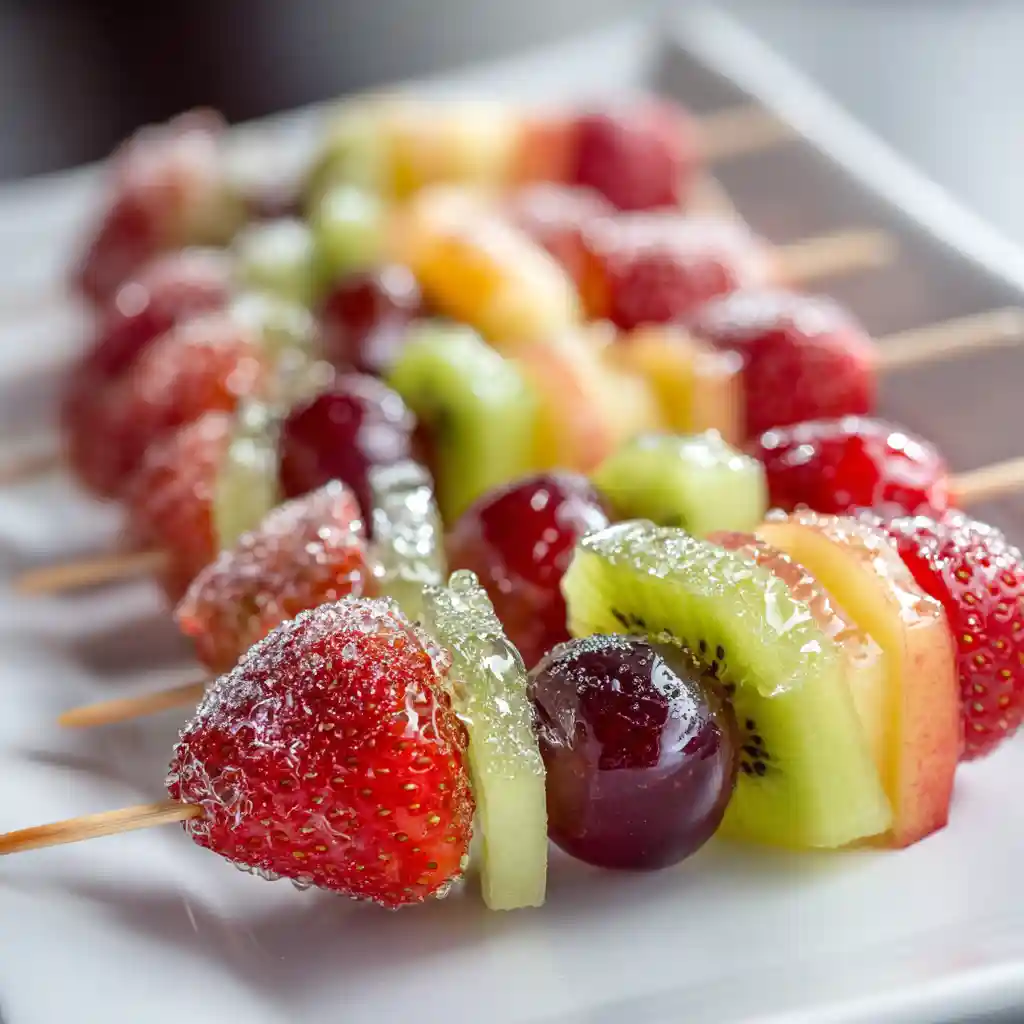
In this guide, you’ll learn how to make candied fruit skewers perfectly every time, from choosing the right fruits to nailing the sugar glaze. We’ll walk you through the science behind the crunch, essential tools, expert tips, and creative serving ideas. Let’s turn ordinary fruit into dazzling, sweet bites that wow every time.
Table of Contents
Understanding the Magic: The Science Behind Perfect Candied Fruit
Crafting perfect candied fruit isn’t just cooking; it’s a delightful dance with food science. The secret to that irresistible, glassy crunch lies in controlling sugar crystallization. Without proper technique, your syrup might turn grainy or cloudy, rather than clear and brittle.
Sugar crystallization occurs when sugar molecules re-bond into an organized, solid structure. We want to prevent this from happening too quickly or unevenly. This is where acids like lemon juice or cream of tartar, and inverted sugars like corn syrup, become your best friends. They act as “interfering agents,” breaking up the long sugar chains and preventing them from locking together into crystals.
Maintaining the ideal sugar syrup temperature is also paramount. You’ll need to reach the “hard crack stage” (typically 300-310°F or 149-154°C) where the sugar concentration is high enough to create a brittle candy when cooled. Any lower, and your glaze will be sticky; any higher, and it risks burning. Finally, ensuring your fruit is perfectly dry is crucial. Excess water can dilute your syrup, lowering its temperature and sugar concentration, leading to a soft or sticky coat.
As renowned food scientist Dr. Anya Sharma states, “The consistent temperature and the strategic inclusion of interfering agents are not just tips, they are the foundational pillars for achieving that coveted, glass-like candy coating.”
Choosing Your Fruits: A Guide to the Best Skewer Candidates
The foundation of exceptional candied fruit skewers starts with selecting the right fruits. Not all fruits are created equal for candying. You need fruits with firmness, low water content, and a suitable size for dipping and skewering.
For optimal results, we recommend:
- Strawberries: Firm, ripe, and thoroughly dried. A classic choice.
- Grapes: Seedless varieties work best. Ensure they are completely dry to prevent a sticky glaze.
- Apple Slices: Use firm apples like Granny Smith or Honeycrisp. Cut into wedges or rounds and blot dry.
- Kiwi: Peel and slice into thick rounds. Their vibrant color is stunning.
- Pineapple Chunks: Small, firm chunks work wonderfully.
- Mandarin Orange Segments: Peel carefully, removing as much pith as possible, and ensure they are dry.
Preparation is Key: Always wash your fruit thoroughly, then dry it completely with paper towels. Any residual moisture is the enemy of a crisp candy coating. For apples, a quick dip in lemon water can prevent browning before candying.
Essential Equipment Checklist for Candying Success
Having the right tools makes all the difference in achieving perfect candied fruit skewers. Don’t worry, most items are likely already in your kitchen!
- Wooden Skewers: For dipping and serving.
- Heavy-Bottomed Saucepan: Distributes heat evenly, preventing scorching.
- Candy Thermometer: Absolutely crucial for accurate temperature readings. No guessing!
- Silicone Mat or Parchment Paper: For cooling your candied fruit without sticking.
- Ice Bath Ingredients: A bowl of ice water, ready for immediate cooling of the pan if needed.
- Tongs: For safely dipping fruit into hot syrup.
- Pastry Brush: To brush down sugar crystals from the sides of the pan.
Pro-Tip: If you don’t have a silicone mat, lightly oiled parchment paper is a good alternative. For a candy thermometer, some experienced cooks can gauge the hard crack stage by dropping a small amount of syrup into cold water – it should form brittle threads. However, for consistent success, a thermometer is highly recommended.
How to Make Candied Fruit Skewers : Step-by-Step Guide
Follow these meticulous steps to create stunning candied fruit skewers every single time.
- Prep Your Fruit: Wash your chosen fruits thoroughly. The most critical step here is to dry them completely. Use paper towels to blot away every drop of moisture. Then, carefully skewer your fruits, ensuring they are secure. Set aside.
- Make the Sugar Syrup: In a heavy-bottomed saucepan, combine 2 cups granulated sugar with 1 cup water and 1 tablespoon corn syrup (or 1 teaspoon lemon juice). The corn syrup or lemon juice helps prevent crystallization. Stir gently only until the sugar dissolves. Once it comes to a boil, do not stir again. Stirring at this stage can introduce crystals and cause the syrup to seize.
- Achieve Candy Stage: Insert your candy thermometer into the syrup, ensuring it doesn’t touch the bottom of the pan. Bring the mixture to a boil over medium-high heat. Continue to cook without stirring until the thermometer reads between 300-310°F (149-154°C). This is the “hard crack stage,” essential for a brittle, non-sticky coating. If any sugar crystals form on the sides of the pan, use a wet pastry brush to gently wipe them down.
- Dip & Coat: Immediately remove the saucepan from the heat. Working quickly, carefully dip each skewered fruit into the hot sugar syrup. Roll it gently to ensure an even, thin coat. Lift the fruit, allowing any excess syrup to drip off back into the pan. Common Mistake Alert: Dipping too slowly can lead to an uneven, thick coat or cooked fruit. Speed is key here!
- Cool & Set: Place the freshly coated candied fruit skewers onto a silicone mat or parchment paper immediately. The candy will harden rapidly. Some people prefer to briefly dip the bottom of the saucepan into an ice bath between dips to maintain syrup consistency, but this is optional for smaller batches. Allow to cool completely at room temperature, which usually takes about 10-15 minutes.
Mastering the Glaze: Advanced Techniques & Gourmet Twists
Once you’ve perfected the classic candied fruit skewer, it’s time to elevate your creations with gourmet twists. These techniques will transform your skewers into true culinary masterpieces.
- Flavor Infusions: Infuse your sugar syrup for an added layer of complexity.
- Extracts: Add a few drops of vanilla, almond, or peppermint extract after removing the syrup from heat.
- Spices: Simmer a cinnamon stick, star anise, or a few cardamom pods in the syrup, removing them before dipping.
- Citrus Zest: Add zest from an orange or lemon to the syrup for a bright, aromatic kick.
- Natural Coloring: Ditch artificial dyes and use natural ingredients for vibrant hues.
- Beetroot Powder: A tiny pinch creates beautiful pinks and reds.
- Spirulina Powder: For stunning greens and blues.
- Fruit Purees: A small amount of raspberry or blueberry puree can subtly tint the syrup, but be careful not to add too much liquid, which affects the hard crack stage.
- Double-Dipping for Texture: For a thicker, more substantial candy coat, allow the first layer to fully set, then re-dip the fruit into freshly reheated (to 300-310°F) syrup. This creates a satisfyingly robust crunch.
- Sprinkles & Toppings: Before the glaze fully sets, quickly add delicious embellishments.
- Finely Chopped Nuts: Pistachios, almonds, or walnuts add texture.
- Edible Glitter: For a truly magical, shimmering effect.
- Coconut Flakes: Toasted or plain, for a tropical touch.
- Sesame Seeds: A unique savory-sweet contrast.
Healthy & Dietary Alternatives: Enjoying Candied Fruit Guilt-Free
The joy of candied fruit skewers can be adapted to various dietary needs and preferences. While the traditional recipe relies heavily on sugar, there are ways to create delicious alternatives.
- Sugar Substitutes:
- Erythritol & Xylitol: These sugar alcohols can create a brittle coating, but they behave differently. They might require slightly different ratios and have a cooling sensation. Note: Xylitol is highly toxic to dogs.
- Stevia/Monk Fruit: While excellent sweeteners, they typically don’t caramelize or achieve the same hard crack stage as sugar, making a traditional hard candy coating challenging. Best for a softer, thinner glaze.
- Natural Sweeteners:
- Honey or Maple Syrup: These can be used, but they are hygroscopic (absorb moisture) and will result in a chewier, stickier glaze rather than a hard, brittle candy. They also don’t reach the same high temperatures for a hard crack. Best for a softer, slightly sticky fruit candy coating.
- Vegan Options: Ensure your granulated sugar is bone-char free. Many brands are, but check the label if this is a concern. The rest of the ingredients are naturally vegan.
- Lower Sugar Variations: For those looking to reduce sugar intake, consider a very thin glaze. Alternatively, use smaller pieces of fruit so that the fruit-to-candy ratio is higher.
Mini-Recipe: Keto Candied Grapes:
Combine 1 cup erythritol with 1/2 cup water and 1/4 tsp cream of tartar. Heat slowly to 280-290°F. Dip very dry grapes quickly and place on a silicone mat. Note that the texture will be slightly different from traditional sugar candy.
Storage Tips & Shelf Life: Keeping Your Skewers Fresh
The delicate, crisp nature of candied fruit skewers means proper storage is essential to maintain their quality.
The enemy of candied fruit is humidity. Moisture in the air will cause the sugar coating to become sticky and eventually dissolve.
- Ideal Storage Conditions: Store your candied fruit skewers in a cool, dry place, away from direct sunlight. An airtight container is crucial to protect them from ambient moisture.
- Refrigeration vs. Room Temperature: Generally, room temperature (in a cool, dry environment) is better than the refrigerator. The high humidity inside a refrigerator can cause the sugar to sweat and become sticky faster.
- Estimated Shelf Life: For that perfect, shatteringly crisp coating, candied fruit skewers are best enjoyed within 1-2 hours of preparation. They can last up to 24 hours if stored correctly, but the crispness will gradually diminish. Beyond that, they will likely become sticky.
Loved learning how to make candied fruit skewers? Don’t forget to save this recipe on Pinterest so you can come back to it anytime! Follow us for more stunning, easy-to-make treats that wow every time.
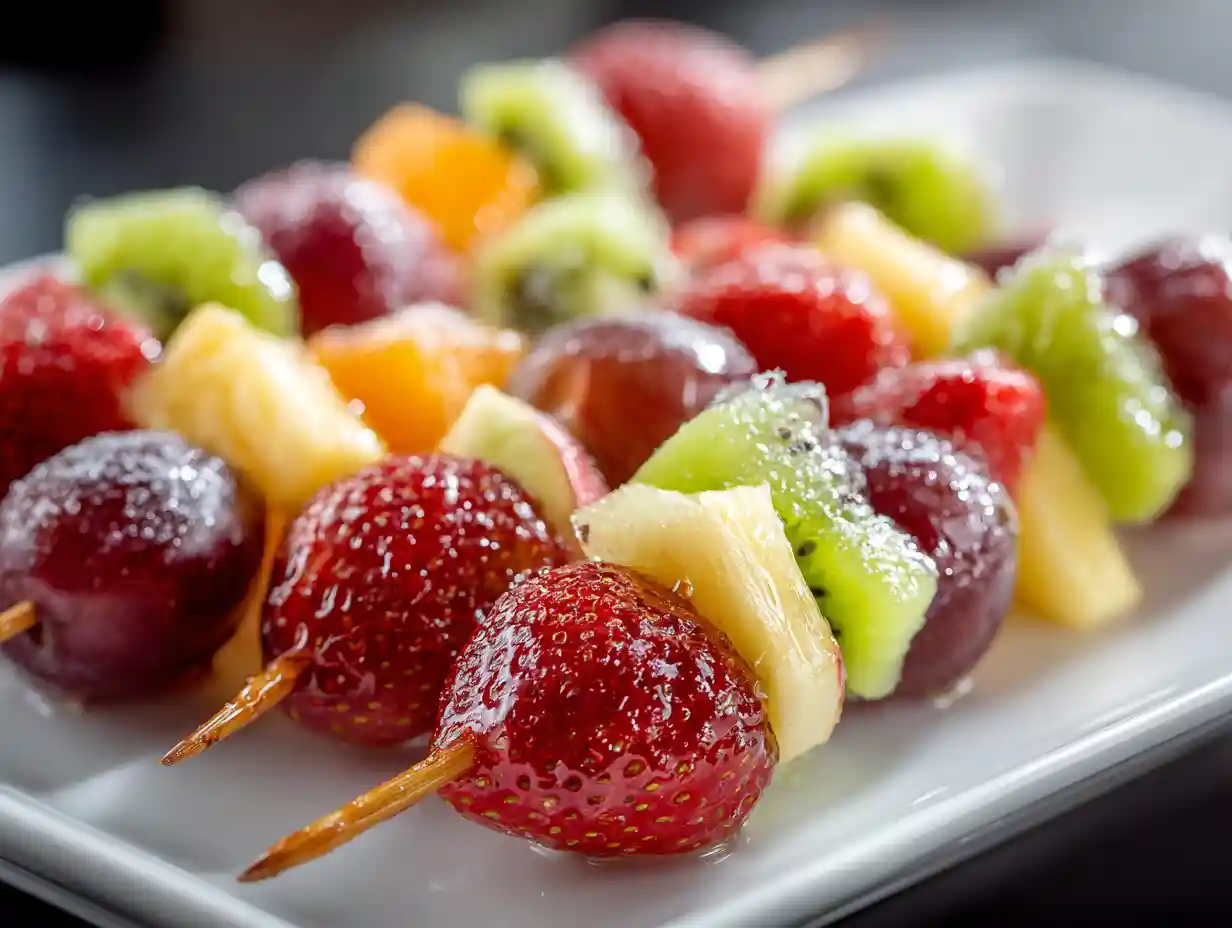
How To Make Candied Fruit Skewers
Ingredients
Method
- Wash and fully dry the fruit. Skewer tightly but leave room for dipping.
- Combine sugar, water, and corn syrup/lemon juice in a heavy saucepan. Stir gently until sugar dissolves.
- Bring to boil, then stop stirring. Heat to 300–310°F (hard crack stage) using a candy thermometer.
- Remove from heat. Working quickly, dip and rotate each skewer to coat evenly. Let excess drip off.
- Place on a silicone mat or parchment paper to harden. Set for 10–15 minutes before serving.
Notes
- Avoid Moisture: Fruit must be 100% dry or candy won’t stick properly.
- No Thermometer? Drop a bit of syrup into cold water—it should form brittle threads.
- Storage: Best eaten within 1–2 hours for optimal crunch. Store in airtight container at room temp up to 24 hrs.
- Gourmet Twist: Add edible glitter or drizzle with melted chocolate once cooled for extra flair.